How Long After I Have a Baby Can I Have Gastric Sleeve Surgery
In this department:
- What are the surgical options?
- How is the surgery performed?
- What should I expect earlier surgery?
- What should I await after surgery?
- How much weight tin can I expect to lose?
The type of surgery that may be best to help a person lose weight depends on a number of factors. You should talk over with your md what kind of surgery might be best for you.
What are the surgical options?
In the United States, surgeons most often perform three types of operations
- gastric sleeve
- gastric bypass
- adaptable gastric band
Surgeons less commonly utilise a fourth functioning, biliopancreatic diversion with duodenal switch.
Gastric sleeve
In gastric sleeve surgery, besides called vertical sleeve gastrectomy, a surgeon removes most of your tummy, leaving simply a banana-shaped section that is closed with staples. The surgery reduces the amount of food that can fit in your stomach, making you feel full sooner. Taking out part of your stomach may besides bear upon hormones or bacteria in the gastrointestinal organisation that affect appetite and metabolism. This type of surgery cannot exist reversed considering some of the tum is permanently removed.
Gastric bypass
Gastric bypass surgery, besides called Roux-en-Y gastric featherbed, is done in three steps. Kickoff, the surgeon staples your breadbasket, creating a small pouch in the upper section. The staples make your stomach much smaller, and then you lot eat less because you feel full sooner.
Next, the surgeon divides your pocket-size intestine into two parts and attaches the lower part direct to the pocket-sized tummy pouch. Nutrient will bypass most of your stomach and the upper role of your small intestine, so your body absorbs fewer calories.
The surgeon and so reconnects the upper part of the small intestine to a new location farther downwards on the lower office of the minor intestine. This allows digestive juices in the tummy to flow from the bypassed office of the small intestine to the lower office of the small intestine, so that food tin can be fully digested. The bypass changes hormones, bacteria, and other substances in the gastrointestinal tract that may touch appetite and metabolism. Gastric bypass is hard to reverse, although a surgeon may do it if medically necessary.
Adjustable gastric band
In this type of surgery, the surgeon places a band with an inner inflatable band effectually the top of your tum to create a small pouch. Similar gastric sleeve and gastric bypass surgery, the gastric band makes yous feel total afterward eating a small amount of food. The inner ring has a circular balloon inside that is filled with saline solution. The surgeon can adjust the inner band to resize the opening from the pouch to the residue of your stomach by injecting or removing the saline solution through a pocket-size device, chosen a port, that is placed under your peel.
Later on surgery, you lot volition need several follow-up visits to adjust the size of the band opening. If the band causes problems or is non helping yous lose enough weight, the surgeon may remove it.
Today, adjustable gastric ring surgery is less commonly performed in the U.s.a., compared with the gastric sleeve or gastric bypass, because it is associated with more complications, predominantly the need for ring removal due to intolerance.5 Gastric ring surgery also typically results in significantly less weight loss and is associated with more complications, predominately the need for band removal due to intolerance.5
Biliopancreatic diversion with duodenal switch
A surgical process chosen biliopancreatic diversion with duodenal switch, or "mixed surgery," involves two divide procedures. The offset procedure is similar to gastric sleeve surgery. A second surgical process divides the small intestine into ii tracts. Food moves through ane tract, bypassing most of the small intestine. This reduces the number of calories and amount of nutrients absorbed. Digestive juices flow from the stomach through the other intestinal tract and mix with food equally it enters the colon.
This type of surgery allows yous to lose more than weight compared with the other three operations described above. However, it is as well the most likely to cause surgery-related problems and a shortage of vitamins, minerals, and proteins in your body. For these reasons, surgeons practise not perform this particular procedure often. Nonetheless, some surgeons may recommend information technology for patients who accept severe obesity plus other health atmospheric condition.
Nearly Common Weight-loss Surgeries
Gastric Sleeve
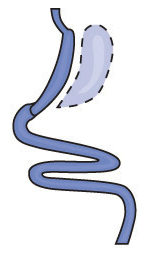
What it is
A surgeon removes most 80 percentage of stomach, creating a long, banana-shaped pouch.
Pros
- Greater weight loss than gastric band
- No changes to intestines
- No foreign objects placed in torso
- Short infirmary stay
Cons
- Cannot exist reversed
- Risk of vitamin and fe deficiency (shortage)
- College run a risk of surgery-related issues than gastric band
- Risk of acrid reflux and hiatal hernia (caused by the tum pushing upwards against the diaphragm)
Gastric Bypass
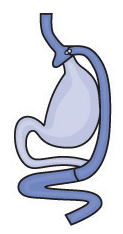
What it is
A surgeon staples top function of the stomach, creating a small pouch, and attaches it to the center office of the small-scale intestine.
Pros
- Greater weight loss than gastric band
- No foreign objects placed in trunk
Cons
- Difficult to reverse
- Higher chance of vitamin and iron shortage than gastric band or gastric sleeve
- Higher risk of surgery-related problems than gastric band
- May increment adventure of alcohol use disorder
Adaptable Gastric Band
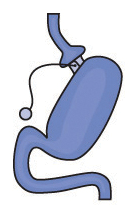
What It Is
A surgeon places an inflatable band around top part of the stomach, creating a small pouch with an adjustable opening.
Pros
- Can be adjusted and reversed
- Short hospital stay and low risk of initial surgery-related bug
- No changes to intestines
- Lowest risk of vitamin shortage
Cons
- Less weight loss than other types of weight-loss surgery
- Frequent follow-up visits to arrange band; some people may not adapt to band
- Possible hereafter surgery to remove or supervene upon all or part of the band system.
Adapted from: Bariatric surgery procedures. American Social club for Metabolic and Bariatric Surgery (ASMBS). Accessed October 5, 2020. https://asmbs.org/patients/bariatric-surgery-procedures. Epitome credit: Walter Pories, M.D., FACS.
How is the surgery performed?
Weight-loss surgery is mostly done laparoscopically, which requires but pocket-sized cuts, under general anesthesia. Through these incisions, the surgeon tin can insert thin tools and a pocket-sized scope attached to a photographic camera that projects images onto a video monitor. Laparoscopic surgery has fewer risks than open surgery and may cause less pain and scarring. Recovery may likewise be faster with laparoscopic surgery.
Open surgery, which involves a single, big cut in the abdomen, may be a better choice than laparoscopic surgery for certain people. Y'all may need open surgery if y'all have a high level of obesity, had tummy surgery before, or have other circuitous medical problems.
What should I look earlier surgery?
Before surgery, you will meet with several health care professionals, such as an internist, a dietitian, a psychiatrist or psychologist, and a bariatric surgeon.
- The internist will ask about your medical history, perform a thorough physical exam, and society blood tests. If you lot smoke, you may benefit from stopping smoking at least six weeks before your surgery.
- The dietitian will explain what and how much you will be able to eat and drinkable after surgery and assist you prepare for how your life will change later on surgery.
- The psychiatrist or psychologist may assess you to see if you lot are ready to manage the challenges of weight-loss surgery.
- The surgeon will tell yous more almost the surgery, including how to set for information technology and what type of follow-up you will need.
These health intendance professionals also will advise you to become more active and adopt a good for you eating plan before and subsequently surgery. Losing weight and bringing your blood glucose—also known as blood sugar—levels closer to normal before surgery may lower your chances of having surgery-related problems.
Some weight-loss surgery programs have groups you can nourish before and later on surgery to help answer questions about the surgery and offer support.
What should I look later surgery?
Afterwards surgery, you will need to rest and recover. Walking and moving around the house may help you recover more quickly. Start slowly and follow your wellness care professional'southward advice about the blazon of physical activity you tin do safely. As you feel more than comfortable, add more physical activeness.
After surgery, you will probably be started on a liquid diet. Over several weeks, you will move to a soft diet that includes such foods equally cottage cheese, yogurt, or soup. Eventually y'all volition begin consuming solid foods again. Your health intendance professional volition tell you which foods and beverages you may have and which ones y'all should avert. You will demand to eat small meals and chew your food well. You lot volition need to take dietary supplements that your health care professional prescribes to make sure yous are getting enough vitamins and minerals.
How much weight can I expect to lose?
The number of pounds people lose later on weight-loss surgery depends on the individual and on the blazon of surgery. One written report found that subsequently 1 year, people undergoing adjustable gastric banding, gastric sleeve, and gastric featherbed lost between 38 and 87 pounds. Of the 3 most common procedures, gastric bypass produced greater weight loss, on average, but had more complications in the calendar month subsequently surgery. Almost people regained some weight over fourth dimension, but that amount was usually modest compared with their initial weight loss.6
Your weight loss could exist different. Remember, reaching your goal depends not but on the surgery but also on sticking with healthy lifestyle habits.
References
Source: https://www.niddk.nih.gov/health-information/weight-management/bariatric-surgery/types
0 Response to "How Long After I Have a Baby Can I Have Gastric Sleeve Surgery"
Post a Comment